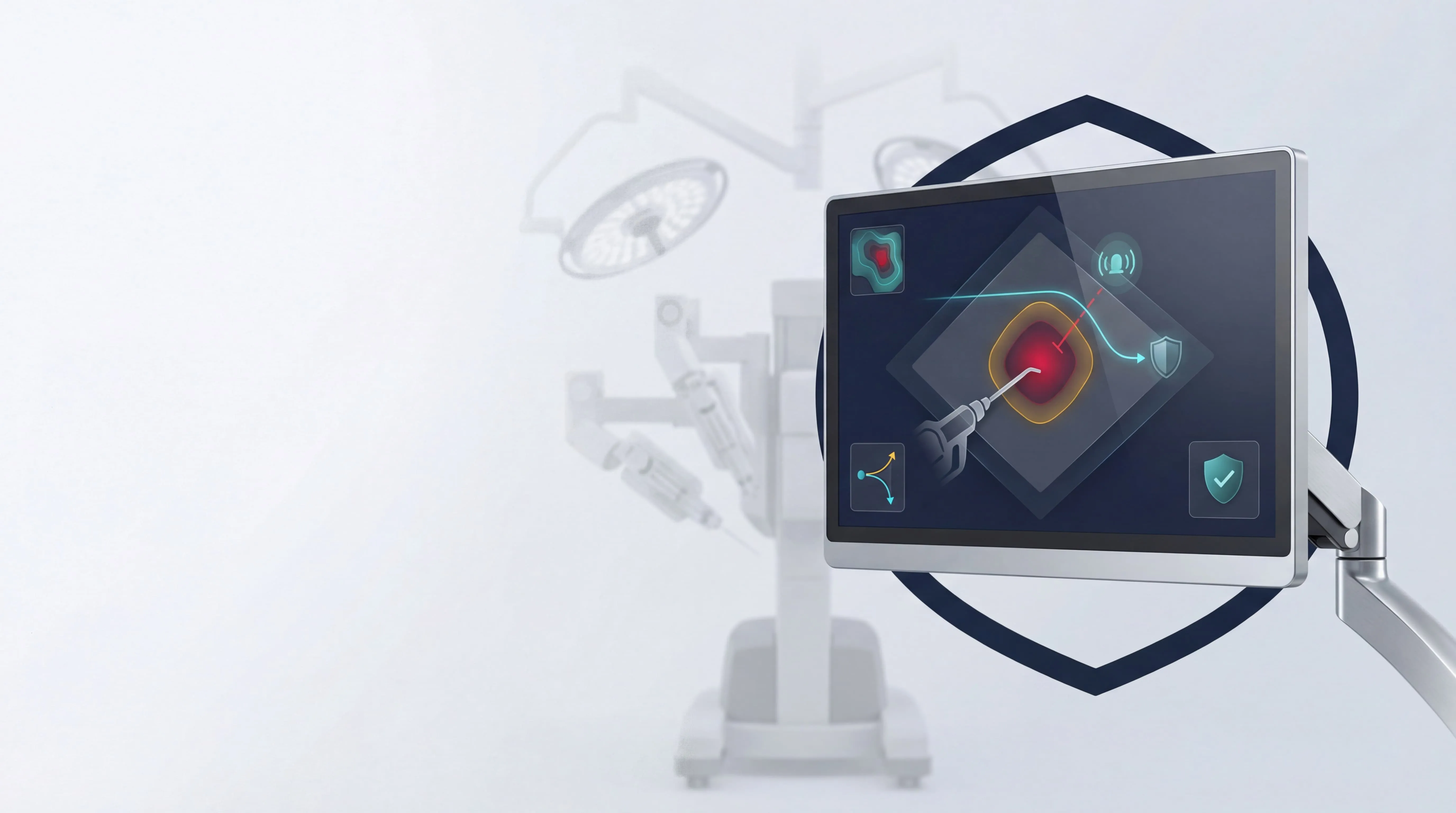
CardioVis AI Copilot
Danger Event Avoidance
See risk before the next move
See risk before the next move
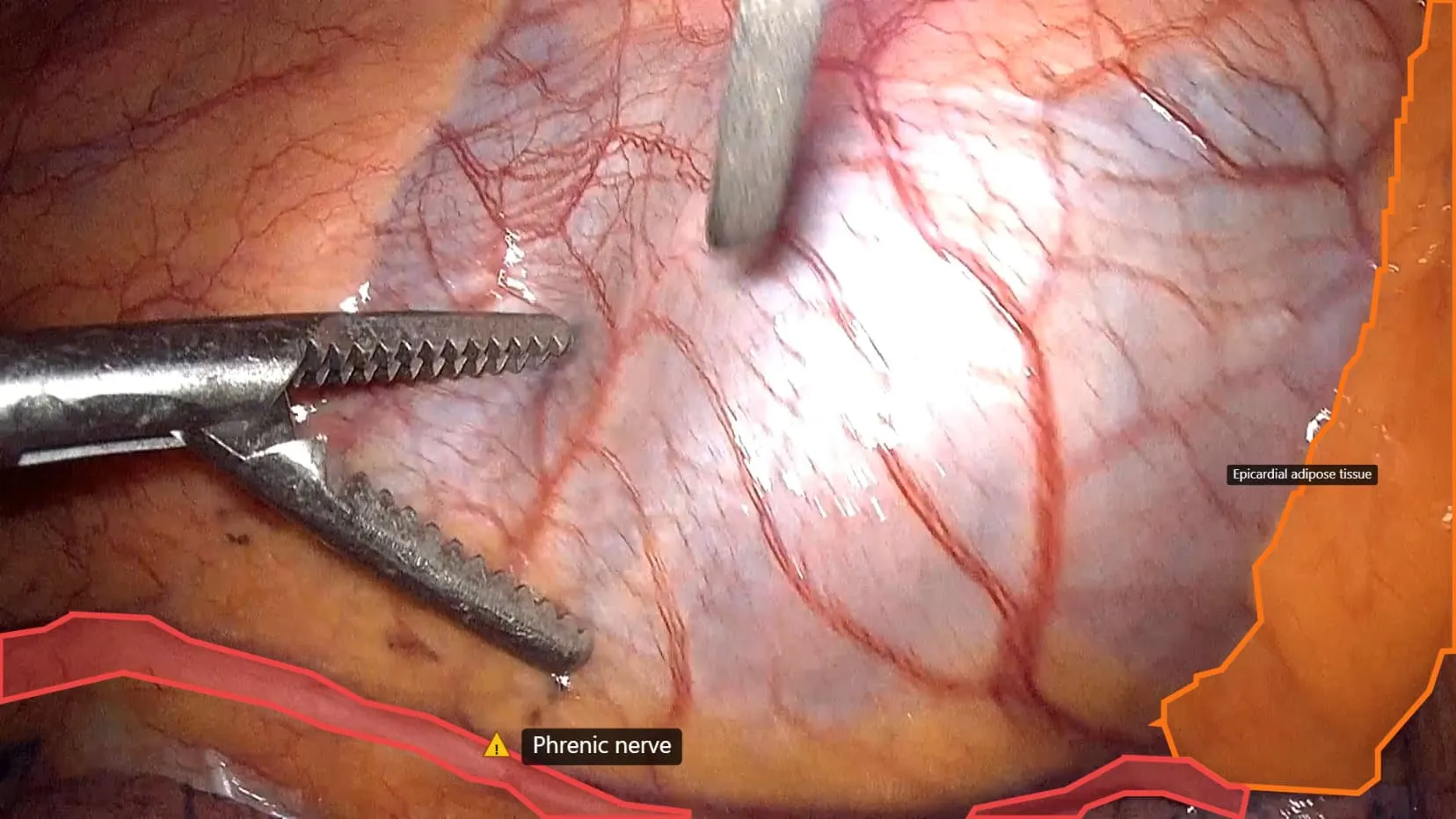
CardioVis continuously reads spatial context in the operative field and surfaces early warnings as low-friction overlays, helping teams correct trajectory before damage occurs.
Proximity, boundary, and collision risks are flagged ahead of unsafe contact.
Guidance appears inside the endoscopic view with no modal interruption.
Independent hazard types are tracked together in one unified display.
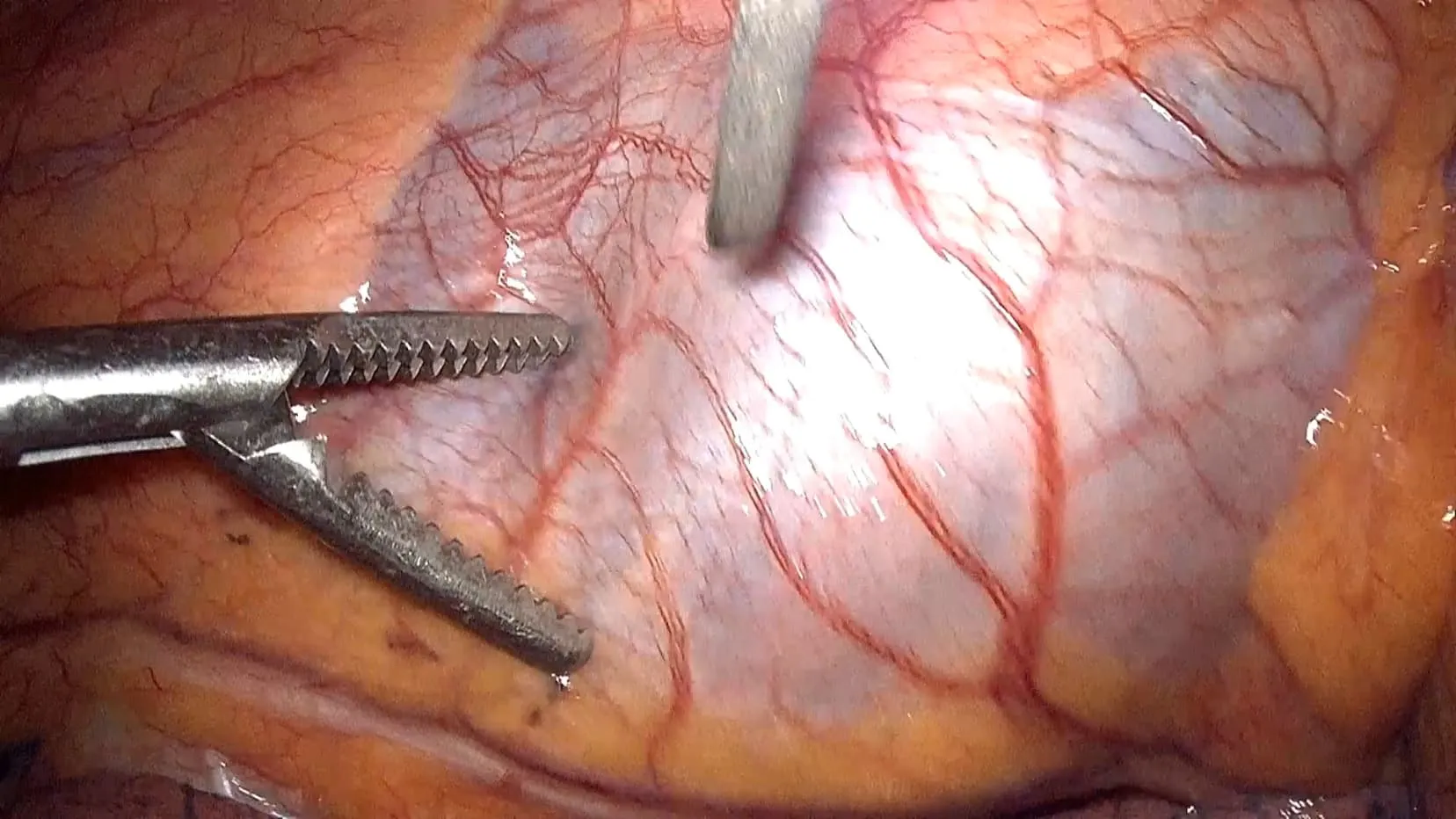
Without guidance, risk boundaries stay implicit. With CardioVis overlays, danger zones and safe corridors become explicit at a glance.
Danger Event Avoidance is built on a modular AI pipeline designed for real-time surgical inference. Each component is individually validated and orchestrated for sub-80 ms end-to-end latency.
Deep-learning models segment instruments, tissue, and suture material every frame to build a semantic map of the operative field.
Computes instrument-to-structure distances in real time and evaluates them against configurable safety thresholds per hazard category.
Short-horizon motion forecasting predicts where each instrument will be 200–500 ms in the future, enabling pre-emptive rather than reactive alerts.
GPU-accelerated compositing blends hazard overlays onto the endoscopic feed with <80 ms total pipeline latency, meeting real-time OR requirements.